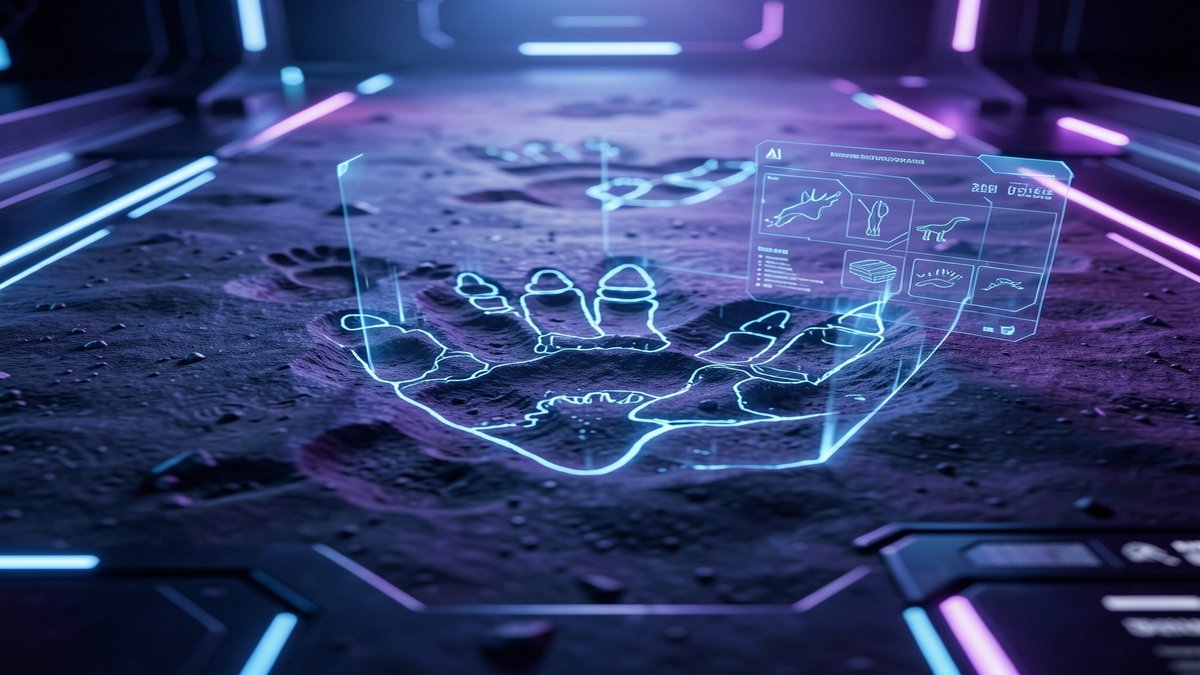
How AI DinoTracker Identifies Dinosaur Footprints
Useful Summary
AI DinoTracker is a mobile‑first application that automatically detects, measures, and classifies fossilized dinosaur footprints from photographs. By applying convolutional neural networks trained on a curated library of trace fossils, the app converts raw images into scientific data—species suggestions, stride dimensions, and geolocation tags—within seconds. The tool bridges the gap between field discovery and digital analysis, allowing paleontologists, educators, and citizen scientists to record trace fossils with consistent accuracy while preserving fragile sites. The key takeaway is that AI DinoTracker transforms a traditionally labor‑intensive process into a rapid, repeatable workflow, expanding both the quantity and quality of footprint data available for research and education.
Core Explanation
Introduction to dinosaur footprint tracking
Footprint (ichnological) evidence records the behavior, locomotion, and environment of extinct animals when skeletal remains are absent. Stride length, gait, and trackway orientation reveal walking speed, herd dynamics, and paleo‑environmental conditions. Historically, researchers relied on manual mapping, plaster casting, and hand‑measured dimensions—methods that are time‑consuming, susceptible to human error, and sometimes damaging to the substrate.
Digital photography, geographic information systems (GIS), and photogrammetry have mitigated some limitations, yet the bottleneck of accurate identification remains. AI DinoTracker addresses this by embedding image‑processing and machine‑learning directly into a handheld device.
Overview of the AI DinoTracker app
- Core purpose – Detect and classify dinosaur footprints automatically, providing immediate measurement data and confidence scores.
- Key components –
1. Image acquisition – High‑resolution capture or upload of a track surface.
2. Pre‑processing – Automatic lighting correction, distortion removal, and insertion of a user‑provided scale reference.
3. Model inference – A convolutional neural network (CNN) evaluates the image, extracts morphological features, and returns a ranked list of possible taxa with associated probabilities.
4. Result display – Species suggestion, metric data (length, width, stride, pace), and map tagging for later export. - Platform accessibility – Available on smartphones, tablets, and desktop browsers; offline mode stores images locally and syncs results when connectivity returns.
Understanding the AI model
The model was trained on a diverse dataset encompassing varied track shapes, sizes, and preservation states. Expert paleontologists labeled each example with taxonomy, toe count, claw impressions, and trackway geometry. Supervised learning allowed the network to associate visual patterns with these labels.
Features evaluated
- Toe count and spatial arrangement
- Claw curvature and depth
- Inter‑track spacing and angular orientation
- Surface texture patterns indicative of sediment type or erosion
Performance metrics – Accuracy (correct species identification), precision (low false‑positive rate), recall (ability to detect true tracks among background), and calibrated confidence scores.
Limitations and mitigation – Non‑dinosaur trace fossils, poor lighting, and heavily weathered surfaces can confuse the model. The app therefore prompts users to verify or correct suggestions; verified entries feed back into the training loop, continuously improving robustness.
Practical field workflow
- Preparation – Clean the track surface of loose debris, bring a calibrated ruler or known‑size object, and ensure a stable lighting source (natural diffused light or portable LED).
- Image capture – Use macro or close‑up mode, keep the camera perpendicular to the surface, and include the scale reference in the frame.
- Processing – The app auto‑corrects exposure, aligns the scale, and runs the CNN inference.
- Interpretation – Review confidence scores; high scores (> 80 %) typically indicate reliable identification. Examine measured dimensions (track length, width, stride) displayed alongside the suggested taxon.
- Export – Data can be saved as CSV for statistical analysis, KML for GIS integration, or shared with collaborative databases.
Impact on paleontological research
AI DinoTracker accelerates the discovery of new track sites by enabling rapid on‑site validation. Large‑scale statistical analyses of locomotion become feasible when thousands of standardized measurements are available. Citizen‑science participants can contribute verified records, expanding geographic coverage and fostering public engagement. The tool also integrates with sedimentology models, 3‑D reconstruction software, and skeletal fossil databases, enriching multidisciplinary interpretations of ancient ecosystems.
Future directions
Ongoing development focuses on expanding the training library to include additional taxa (early tetrapods, invertebrate trace fossils) and preservation states. Augmented reality overlays are being prototyped to guide users in real time, while collaborative mapping features aim to synchronize multiple field teams instantly. Community‑driven labeling campaigns and open‑source data repositories ensure that the model evolves with input from a global network of experts and enthusiasts.
What This Means for Readers
For professional paleontologists – The app reduces the time between field discovery and data analysis, allowing researchers to allocate more resources to hypothesis testing and synthesis. Standardized measurements improve reproducibility across studies, facilitating meta‑analyses of gait dynamics and paleo‑environmental reconstructions.
For educators and museum curators – Interactive demonstrations of footprint identification become possible without specialized laboratory equipment. Students can photograph local track sites, run the analysis on a tablet, and immediately discuss the inferred behavior of the trackmaker, reinforcing concepts in earth science curricula.
For citizen scientists and hobbyists – Low barriers to entry enable enthusiasts to contribute verifiable data to global databases. By following the app’s best‑practice checklist, amateurs can avoid common pitfalls such as distorted angles or inadequate scaling, ensuring that their submissions meet scientific standards.
For software developers and data managers – The continuous‑learning architecture exemplifies a successful feedback loop: user‑validated outputs improve model performance, which in turn enhances user confidence. Developers can adopt similar pipelines for other pattern‑recognition challenges in geology, archaeology, or ecology.
Actionable insights –
- Incorporate a calibrated scale in every photograph.
- Verify AI suggestions before publishing; correct misclassifications promptly.
- Export data in interoperable formats (CSV, KML) to integrate with existing GIS or statistical workflows.
- Participate in community labeling drives to broaden the model’s taxonomic reach.
Historical Context
The study of trace fossils began with simple hand‑drawn sketches and plaster casts, techniques that provided valuable qualitative insights but limited quantitative precision. The advent of aerial photography and later digital imaging introduced the ability to archive high‑resolution visual records, yet identification still depended on expert visual comparison. Over the years, GIS and photogrammetric software enabled three‑dimensional reconstructions of trackways, improving spatial analysis but not automating taxonomic classification. Machine‑learning methods, initially applied to vertebrate skeletal identification, gradually migrated to ichnology as sufficient labeled datasets became available. The synthesis of these technologies culminated in a portable, AI‑driven platform that unites image capture, automated analysis, and data sharing within a single interface.
Forward-Looking Perspective
Future iterations of AI DinoTracker are expected to deepen integration with broader paleontological workflows. Embedding augmented reality could provide on‑site visual cues for optimal camera angles and real‑time measurement overlays. Collaborative cloud environments may allow multiple researchers to annotate the same trackway simultaneously, fostering distributed peer review. Expanding the model to recognize trace fossils beyond dinosaurs—such as early amphibian or arthropod tracks—will broaden its applicability across deep time. Persistent challenges include handling heavily eroded or partially obscured prints and ensuring that the continuous‑learning loop remains free from systematic bias. Nevertheless, the convergence of computer vision, crowd‑sourced data, and interdisciplinary research promises a future where trace‑fossil data are as readily accessible and analytically robust as skeletal specimens, reshaping our understanding of ancient life’s movements and habitats.